


The construction sector stands on the brink of a technological revolution that could fundamentally transform how buildings are erected. A groundbreaking innovation has emerged in the form of an autonomous robotic system capable of constructing entire residential structures in less than a day. This spider-like robot represents a convergence of advanced robotics, artificial intelligence, and sustainable building practices, promising to address critical housing shortages whilst reducing environmental impact. The technology challenges conventional construction timelines and methodologies, offering unprecedented speed and precision.
Introduction to the builder spider robot
Origins and development
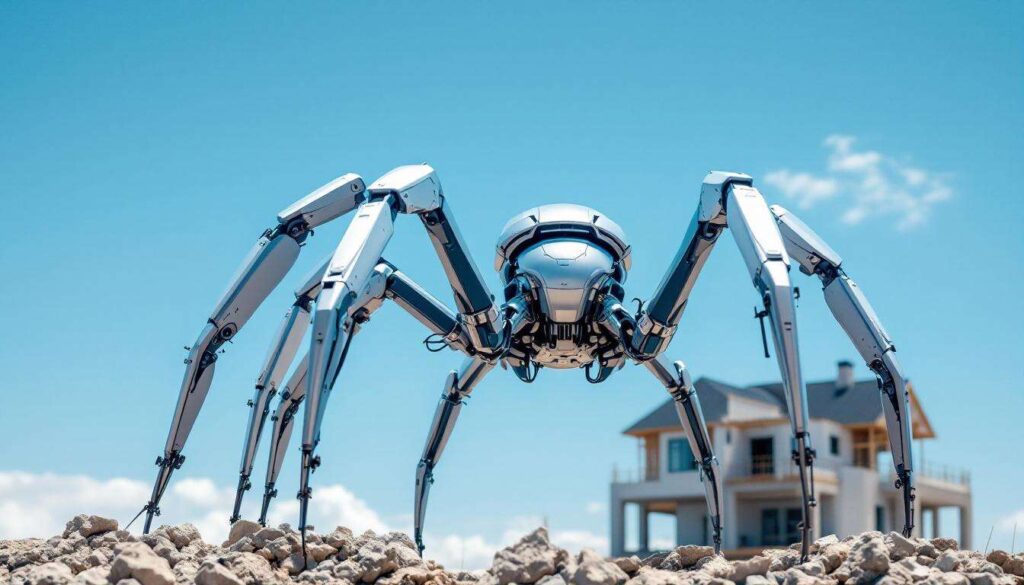
The spider robot concept originated from collaborative research between robotics engineers and construction specialists seeking to automate the building process. This multi-legged autonomous system draws inspiration from arachnid movement patterns, featuring articulated limbs that provide stability and manoeuvrability across uneven terrain. Unlike traditional construction machinery, the robot operates with minimal human intervention, guided by sophisticated algorithms that interpret architectural blueprints and translate them into physical structures.
Key design features
The robot incorporates several distinctive characteristics that enable its remarkable capabilities:
- Multiple articulated arms for simultaneous construction tasks
- Integrated 3D printing nozzles for material deposition
- Advanced sensors for terrain mapping and obstacle detection
- Autonomous navigation systems powered by artificial intelligence
- Modular design allowing adaptation to various building specifications
These features work in concert to create a versatile construction platform that adapts to diverse architectural requirements whilst maintaining structural integrity and precision. The system’s ability to operate continuously without fatigue represents a significant advantage over human labour forces.
Understanding the robot’s physical attributes provides context for examining the sophisticated technology that powers its operations.
Functioning and technology behind the robot
Construction methodology
The spider robot employs a layer-by-layer additive manufacturing approach, similar to large-scale 3D printing. It begins by establishing a foundation, then progressively builds walls, internal structures, and eventually roofing components. The system utilises specially formulated construction materials—typically concrete composites or sustainable alternatives—that cure rapidly whilst maintaining structural strength. Precision nozzles deposit material along predetermined paths, creating walls with integrated insulation channels and conduit passages for utilities.
Artificial intelligence integration
The robot’s operational intelligence stems from advanced machine learning algorithms that enable:
- Real-time adaptation to environmental conditions
- Quality control through continuous structural analysis
- Predictive maintenance to prevent operational failures
- Optimisation of material usage to minimise waste
- Coordination with multiple units for larger projects
This intelligent automation ensures consistent quality whilst reducing the margin for human error that typically affects conventional construction projects.
Material handling systems
| Component | Function | Capacity |
|---|---|---|
| Material reservoir | Stores construction compound | 2,000 litres |
| Mixing chamber | Prepares material for deposition | 50 litres/minute |
| Delivery system | Transports material to nozzles | Variable flow rate |
These technological capabilities translate into tangible benefits that extend beyond mere construction speed.
Ecological and economic advantages
Environmental sustainability
The spider robot delivers substantial ecological benefits through optimised material usage and reduced waste generation. Traditional construction projects typically waste between fifteen and thirty per cent of materials, whereas robotic precision reduces this figure to less than five per cent. The system can incorporate recycled materials and sustainable composites, including hempcrete and recycled plastic aggregates, contributing to circular economy principles. Furthermore, the reduced construction timeline minimises site disturbance and associated environmental degradation.
Cost efficiency analysis
Economic advantages manifest across multiple dimensions:
- Reduced labour costs through automation
- Minimised material waste lowering procurement expenses
- Accelerated project completion reducing financing costs
- Lower insurance premiums due to enhanced safety
- Decreased energy consumption during construction
Preliminary estimates suggest that construction costs could decrease by thirty to forty per cent compared to conventional methods, making housing more accessible to broader demographic segments.
These compelling advantages naturally raise questions about how the technology will reshape established industry practices.
Impacts on the construction industry
Workforce transformation
The introduction of spider robots necessitates a fundamental shift in construction employment. Whilst some traditional roles may diminish, new positions emerge in robot operation, maintenance, programming, and oversight. The industry must invest in retraining programmes to equip workers with relevant technical skills. This transition mirrors historical technological disruptions that ultimately expanded employment opportunities through new specialisations.
Regulatory considerations
Adoption of robotic construction requires updated building codes and safety regulations. Authorities must establish standards for:
- Structural integrity verification of robotically constructed buildings
- Certification procedures for autonomous construction systems
- Liability frameworks for automated building processes
- Quality assurance protocols specific to robotic fabrication
These regulatory developments will shape the pace and manner of technology integration across different jurisdictions.
Examining current capabilities naturally leads to consideration of future technological trajectories.
Future prospects and innovations
Scalability and applications
Future iterations of the spider robot may tackle increasingly ambitious construction projects, from multi-storey residential complexes to commercial structures and infrastructure components. Researchers envision swarms of coordinated robots working simultaneously on large developments, dramatically reducing timelines for entire neighbourhoods. The technology could prove particularly valuable in disaster relief scenarios, rapidly providing shelter following natural catastrophes.
Material science advances
Ongoing research explores novel construction compounds specifically formulated for robotic deposition, including self-healing concrete and bio-based composites with enhanced thermal properties. These materials could further improve building performance whilst reducing environmental footprints.
Despite promising prospects, several obstacles must be addressed before widespread adoption becomes feasible.
Current challenges and limitations
Technical constraints
The spider robot currently faces practical limitations including restricted building height capabilities, challenges with complex architectural features, and dependency on favourable weather conditions. The technology remains most effective for relatively simple structural designs, struggling with intricate aesthetic elements that characterise many contemporary buildings.
Implementation barriers
| Challenge | Impact level | Resolution timeline |
|---|---|---|
| High initial investment | Significant | 3-5 years |
| Regulatory approval | Moderate | 2-4 years |
| Public acceptance | Variable | 5-10 years |
Overcoming these hurdles requires coordinated efforts between technology developers, construction firms, regulatory bodies, and educational institutions.
The spider robot represents a transformative innovation with potential to revolutionise construction through unprecedented speed, efficiency, and sustainability. Whilst technical and regulatory challenges persist, the technology’s ecological and economic advantages position it as a compelling solution to global housing needs. As capabilities expand and costs decrease, robotic construction may transition from novelty to industry standard, fundamentally altering how humanity builds its physical environment. The successful integration of this technology depends upon collaborative efforts to address current limitations whilst maximising societal benefits.