



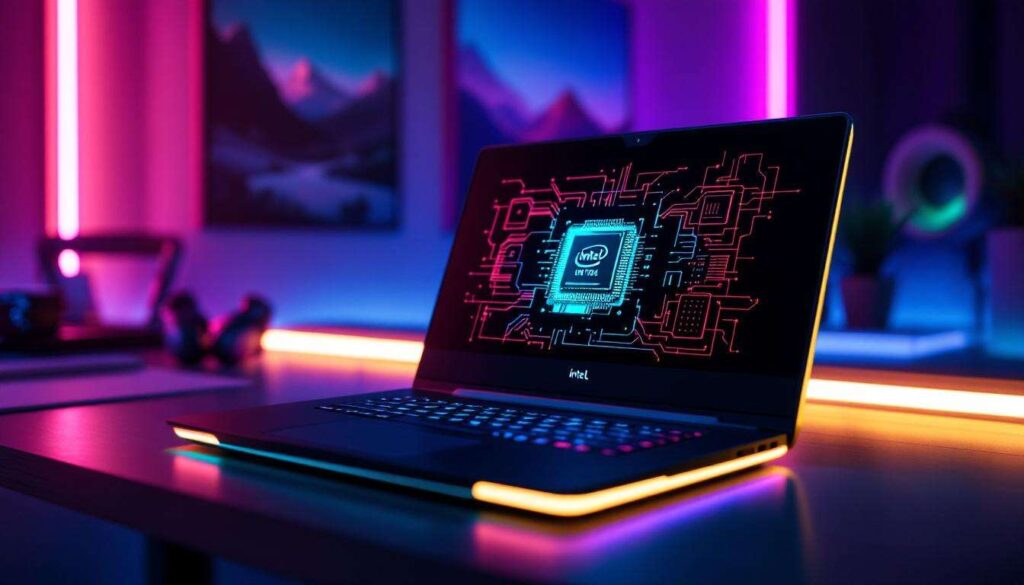
Gaming laptops have long occupied a unique position in the computing landscape, offering portable performance that comes at a premium price. Intel’s latest processor lineup represents a significant shift in this dynamic, with performance capabilities that challenge the traditional distinctions between mobile and desktop gaming systems. The new chips demonstrate processing power and efficiency improvements that could fundamentally alter how gamers approach their hardware purchasing decisions, potentially rendering dedicated gaming laptops less essential than they once were.
Introduction of Intel’s new chips
The latest processor generation
Intel has unveiled its newest generation of processors designed specifically to bridge the performance gap between traditional desktop systems and portable computing devices. These chips incorporate advanced manufacturing processes and architectural improvements that deliver unprecedented performance levels in compact form factors. The company has focused on maximising efficiency whilst maintaining thermal characteristics suitable for smaller chassis designs.
Key specifications and features
The new processors showcase several notable technical achievements:
- Enhanced core counts with hybrid architecture combining performance and efficiency cores
- Improved integrated graphics capabilities that rival discrete GPU solutions
- Advanced power management systems that optimise battery life without sacrificing performance
- Support for faster memory standards and connectivity options
- Reduced thermal design power requirements enabling thinner device designs
These specifications represent a substantial leap forward from previous generations, with Intel claiming performance improvements of up to 40% in certain workloads. The chips also feature enhanced AI acceleration capabilities and improved video encoding functions that benefit content creators alongside gamers.
Understanding these foundational improvements sets the stage for examining the specific technological innovations that make these processors so transformative.
Technological advancements of Intel chips
Architectural innovations
The hybrid core architecture represents Intel’s most significant design evolution in recent years. By combining high-performance cores for demanding tasks with efficiency cores for background processes, the processors deliver optimal performance across diverse workloads. This approach allows the chips to maintain high clock speeds during gaming sessions whilst managing power consumption more effectively than previous designs.
Manufacturing process improvements
Intel’s refined manufacturing techniques have enabled smaller transistor sizes and increased density without compromising reliability. The advanced lithography processes result in chips that generate less heat whilst delivering more computational power, a critical factor for portable devices where thermal management presents ongoing challenges.
Integrated graphics evolution
| Feature | Previous Generation | New Generation |
|---|---|---|
| Execution units | 96 | 128 |
| Graphics frequency | 1.45 GHz | 2.2 GHz |
| Ray tracing support | Limited | Full hardware acceleration |
| Memory bandwidth | 68 GB/s | 96 GB/s |
These improvements in integrated graphics capabilities mean that many gaming scenarios no longer require discrete graphics cards, particularly for popular competitive titles and older AAA games. The addition of hardware-accelerated ray tracing brings modern graphical techniques to integrated solutions for the first time.
These technological foundations directly influence how these processors perform in real-world gaming scenarios.
Impact on laptop performance
Gaming performance metrics
Real-world testing demonstrates that systems equipped with Intel’s new processors achieve frame rates previously exclusive to desktop configurations. In popular titles, the performance delta between gaming laptops and desktop systems has narrowed to single-digit percentages in many cases. Games such as competitive shooters and esports titles run at refresh rates exceeding 144 fps on high settings, meeting the demands of serious gamers.
Thermal efficiency improvements
The reduced power consumption of these processors translates to cooler operating temperatures and quieter cooling solutions. Laptop manufacturers can now design thinner chassis without compromising thermal performance, or alternatively, maintain existing form factors with significantly reduced fan noise. This improvement addresses one of the primary complaints historically associated with gaming laptops: excessive heat and acoustic output during intensive gaming sessions.
Battery life considerations
Perhaps most impressively, the efficiency gains extend to battery-powered operation. Systems equipped with these processors demonstrate:
- Extended gaming sessions on battery power, with some configurations achieving 3-4 hours of gameplay
- Significantly improved productivity battery life exceeding 12 hours for standard tasks
- Rapid charging capabilities that restore 80% capacity in under an hour
- Intelligent power switching that preserves battery when plugged performance isn’t required
This combination of performance and efficiency fundamentally changes the value proposition of portable gaming systems, making them increasingly competitive with traditional desktop configurations.
Narrowing the gap between desktops and laptops
Performance parity analysis
The performance difference between desktop and laptop systems has historically justified the existence of dedicated gaming laptops as a distinct product category. Intel’s new chips challenge this distinction by delivering desktop-class performance in mobile form factors. Benchmarking data reveals that in many gaming scenarios, the performance advantage of desktop systems has diminished to margins that many users would consider negligible.
Upgradeability considerations
Whilst desktop systems retain advantages in component upgradeability, the improved longevity of these powerful mobile processors reduces the practical importance of this factor. A laptop equipped with Intel’s latest chips possesses sufficient performance headroom to remain relevant for gaming purposes over several years, diminishing the traditional desktop advantage of incremental upgrades.
Cost-benefit analysis
| Factor | Desktop System | Laptop with New Intel Chips |
|---|---|---|
| Initial cost | £1,200-£1,500 | £1,400-£1,800 |
| Portability | None | Full mobility |
| Space requirements | Dedicated desk area | Minimal |
| Performance in games | 100% (baseline) | 92-98% |
| Upgrade potential | Excellent | Limited |
The narrowing performance gap combined with the inherent advantages of portability creates a compelling argument for choosing laptop systems over traditional desktops for many gaming scenarios.
These shifts in the competitive landscape have significant implications for how gaming laptop manufacturers position their products.
Consequences for the gaming laptop market
Market repositioning
Gaming laptop manufacturers face a paradoxical situation: Intel’s processors make their products more capable than ever, yet simultaneously reduce the justification for premium gaming-specific designs. The traditional gaming laptop aesthetic with aggressive styling, RGB lighting, and bulky chassis may become less relevant as standard ultraportable designs achieve comparable gaming performance.
Product differentiation challenges
With processor performance becoming less of a differentiating factor, manufacturers must focus on other aspects:
- Display quality and refresh rates become primary selling points
- Build quality and premium materials justify higher price points
- Innovative cooling solutions that maintain silent operation
- Enhanced audio systems for immersive gaming experiences
- Unique form factors such as convertible or dual-screen designs
Pricing pressure and market consolidation
As the performance advantages of dedicated gaming laptops diminish, manufacturers face increased pricing pressure from mainstream laptop lines that incorporate these powerful processors. This could lead to market consolidation, with some gaming-focused brands struggling to justify premium pricing whilst others pivot towards lifestyle branding rather than pure performance positioning.
Looking ahead, Intel’s roadmap suggests these trends will only accelerate in coming product generations.
The future of PC gaming with Intel
Upcoming developments
Intel has outlined plans for continued improvements in integrated graphics performance and overall processing capabilities. Future generations promise even greater efficiency gains and performance improvements that could further erode the distinctions between mobile and desktop gaming. The company’s investment in discrete graphics solutions also suggests a comprehensive approach to gaming across all form factors.
Industry-wide implications
The advancement of mobile processor technology influences the broader gaming ecosystem. Game developers may optimise titles with the assumption that powerful portable systems represent a significant portion of their audience. This could lead to better-optimised games that run efficiently on a wider range of hardware configurations, benefiting all PC gamers regardless of their chosen platform.
The evolving definition of gaming systems
The traditional categorisation of gaming PCs into distinct desktop and laptop segments appears increasingly outdated. Intel’s processors enable a continuum of gaming-capable devices ranging from ultraportable systems to desktop replacements, all offering legitimate gaming performance. This flexibility allows consumers to prioritise the form factor that suits their lifestyle whilst maintaining confidence in gaming capabilities.
Intel’s technological achievements represent more than incremental improvements; they signal a fundamental shift in how we conceptualise gaming hardware. The company’s processors demonstrate that portable systems need not compromise on performance, challenging the long-held assumption that serious gaming requires desktop configurations. Gaming laptops as a distinct product category face an uncertain future, not because they’ve failed, but because mainstream laptops have become so capable that dedicated gaming designs may no longer justify their premium positioning. The democratisation of gaming performance across device categories ultimately benefits consumers, offering unprecedented choice and flexibility in how they experience PC gaming.