



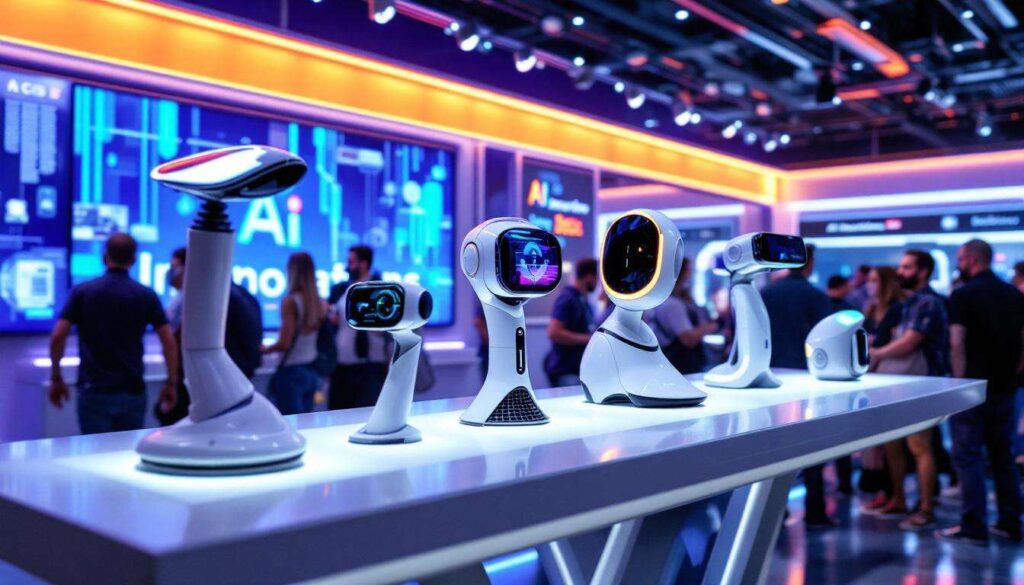
Artificial intelligence continues to reshape our daily lives in ways that oscillate between the brilliant and the bizarre. The latest consumer electronics showcase brought together tech giants and ambitious start-ups, all vying to demonstrate how their AI-powered creations could revolutionise everything from our kitchens to our wardrobes. Amongst the predictable iterations of smart speakers and fitness trackers, several inventions stood out for their sheer audacity and unconventional approach to solving problems we didn’t necessarily know we had. These devices blur the boundaries between helpful innovation and technological eccentricity, raising questions about where convenience ends and peculiarity begins.
The digital psychological assistant that predicts your emotions
An algorithmic approach to mental wellbeing
Perhaps the most controversial invention on display was a device that claims to anticipate emotional states before users themselves become aware of them. This palm-sized gadget combines biometric sensors with machine learning algorithms to analyse subtle physiological changes, creating what developers describe as an emotional forecast system. The device monitors heart rate variability, skin conductance, facial micro-expressions, and even vocal tone patterns to build a comprehensive picture of your psychological state.
The manufacturers assert that their system can predict anxiety episodes up to twenty minutes before they manifest, allowing users to implement coping strategies proactively. During demonstrations, the device successfully identified stress patterns in volunteers subjected to various stimuli, though sceptics questioned whether laboratory conditions translate to real-world accuracy.
Privacy concerns and ethical considerations
Critics have raised significant concerns about the implications of such technology:
- The potential for employers or insurers to access emotional data
- Questions about data storage and encryption standards
- The psychological impact of constant emotional surveillance
- Whether algorithmic predictions might create self-fulfilling prophecies
The company behind this invention insists that all data remains encrypted and locally stored, with no cloud connectivity. However, mental health professionals remain divided on whether predictive emotional monitoring represents genuine therapeutic value or simply adds another layer of anxiety to modern life.
Whilst emotion-tracking technology pushes boundaries in the psychological realm, other inventors have turned their attention to more tangible domestic concerns.
The robotic chef that knows your tastes
Personalised cuisine through machine learning
The kitchen witnessed perhaps the most visually impressive demonstration with a robotic cooking system that adapts recipes based on individual taste preferences. Unlike previous automated cooking devices that simply follow pre-programmed instructions, this system employs adaptive learning algorithms to refine its understanding of your palate over time. The robot features multiple articulated arms, precision temperature control, and an extensive database of ingredient combinations.
Users begin by rating dishes on a detailed flavour profile scale, assessing elements such as saltiness, sweetness, umami, texture, and spiciness. The system then adjusts future preparations, subtly modifying ingredient ratios and cooking techniques. After approximately thirty meals, the manufacturers claim the robot achieves ninety-two per cent satisfaction rates in blind taste tests.
Technical specifications and limitations
| Feature | Specification |
|---|---|
| Cooking capacity | Four servings per cycle |
| Recipe database | Over 5,000 dishes |
| Learning period | 25-35 meals |
| Price point | £8,500 (estimated retail) |
The device requires substantial counter space and a dedicated power supply, making it impractical for smaller kitchens. Additionally, the ingredient recognition system currently works only with pre-packaged components from affiliated suppliers, limiting culinary creativity and raising concerns about vendor lock-in.
From automated gastronomy, the innovation spectrum extends into wearable technology that responds to internal states rather than external commands.
The smart shirt that changes colour according to your mood
Chromatic fabrics meet emotional expression
Fashion technology reached new heights of peculiarity with a garment that transforms its appearance based on the wearer’s emotional state. This mood-responsive clothing incorporates electrochromic threads woven throughout the fabric, capable of shifting through a spectrum of colours. Biometric sensors embedded in the collar region monitor physiological indicators similar to those used by the psychological assistant, translating this data into visual displays.
The shirt’s default mode cycles through subtle colour gradients, but emotional spikes trigger more dramatic transformations. Stress might manifest as deep reds or purples, whilst calm states produce blues and greens. The wearer can also manually override the system or select from pre-programmed colour schemes for social situations where emotional transparency might prove awkward.
Practical applications and social implications
Developers suggest several potential uses for this technology:
- Assisting individuals with autism spectrum disorders in communicating emotional states
- Creating visual feedback for meditation and mindfulness practices
- Enabling non-verbal emotional expression in noisy environments
- Serving as a conversation starter in social settings
However, many observers questioned whether broadcasting one’s emotional state to everyone in visual range represents genuine progress or simply eliminates the last vestiges of emotional privacy. The garment requires weekly charging and specialised cleaning procedures, adding maintenance complexity to an already unusual concept.
Whilst mood-indicating clothing addresses internal expression, other innovations focus on breaking down external communication barriers.
The instant conversation translator headset
Real-time linguistic interpretation
Language barriers faced a formidable challenger in the form of a headset that provides simultaneous translation for face-to-face conversations. Unlike smartphone-based translation apps that require awkward pauses and screen-checking, this device delivers audio translations directly into the wearer’s ear with minimal delay. The system employs neural machine translation combined with speech recognition technology, supporting forty-seven languages at launch.
The headset’s most impressive feature involves its ability to preserve conversational flow. Rather than waiting for complete sentences, the AI begins translating as speech occurs, adjusting its interpretation as context becomes clearer. This approach reduces lag time to approximately two to three seconds, making conversations feel relatively natural despite the technological intermediation.
Accuracy and contextual understanding
Testing revealed both strengths and limitations in the translation quality:
| Language pair | Accuracy rate | Idiomatic comprehension |
|---|---|---|
| English-Spanish | 94% | Good |
| English-Mandarin | 87% | Moderate |
| English-Arabic | 82% | Fair |
| Japanese-French | 79% | Limited |
The device struggles with regional dialects, heavy accents, and culturally specific references that lack direct equivalents. Technical jargon and slang also pose challenges, though the system improves through continuous learning from user interactions. Battery life extends to approximately eight hours of active translation, sufficient for most business meetings or tourist excursions.
As technology bridges linguistic divides, it also ventures into creating entirely artificial relationships that exist purely in digital space.
The virtual pet companion
Digital companionship through advanced AI
Perhaps the most emotionally complex invention involved a holographic pet system that projects three-dimensional animals into living spaces. Unlike simple animated displays, these virtual creatures employ sophisticated behavioural algorithms that simulate realistic pet personalities. The AI learns from interactions, developing unique characteristics and preferences that evolve over time, creating what developers describe as genuine emotional bonds without the responsibilities of actual pet ownership.
The system projects life-sized holograms of various animals, from traditional cats and dogs to more exotic options like red pandas or miniature elephants. These virtual pets respond to voice commands, appear to recognise their owners, and exhibit behaviours ranging from playful to affectionate. The technology tracks household members through cameras and sensors, allowing pets to greet arrivals and seek attention when humans are present.
Benefits and philosophical questions
Proponents highlight several advantages of virtual pet ownership:
- No feeding, cleaning, or veterinary expenses
- Suitable for individuals with allergies or housing restrictions
- Eliminates concerns about pet care during travel
- Provides companionship without long-term commitment
- Allows interaction with species impossible to keep as actual pets
Yet this invention sparked considerable debate about the nature of companionship and whether simulated affection can fulfil genuine emotional needs. Animal welfare advocates expressed concern that virtual pets might reduce empathy for living creatures, whilst psychologists questioned the implications of forming attachments to entities that exist only as projected light and programmed responses. The system requires a dedicated projection unit and subscription service for ongoing AI updates, representing a significant financial commitment for what ultimately remains an elaborate illusion.
The boundaries between innovation and absurdity continue to blur as artificial intelligence infiltrates every aspect of daily existence. These five inventions demonstrate both the remarkable capabilities of modern technology and the sometimes questionable wisdom of its application. Whilst emotion-predicting devices, personalised robotic chefs, mood-indicating clothing, real-time translation headsets, and holographic pets each offer genuine utility, they also raise profound questions about privacy, authenticity, and the human experience. As AI capabilities expand, society faces ongoing challenges in determining which problems genuinely require technological solutions and which aspects of life benefit from remaining delightfully, imperfectly human.