



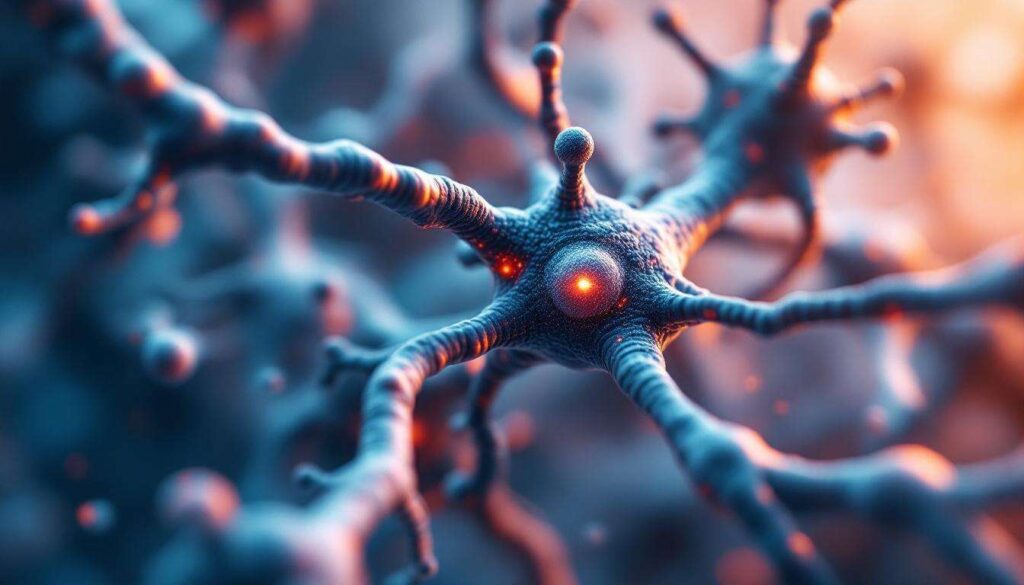
Neuroscience and artificial intelligence have converged in remarkable ways, leading to the development of artificial neurons that closely mimic the behaviour of biological brain cells. These synthetic counterparts represent a significant leap forward in our understanding of neural function and offer promising avenues for medical treatments, computational advancements, and brain-machine interfaces. Scientists have engineered devices capable of replicating the complex electrical signals and adaptive responses characteristic of living neurons, bridging the gap between biology and technology in unprecedented fashion.
Understanding artificial neurons
The fundamental structure of artificial neurons
Artificial neurons are electronic devices designed to replicate the essential functions of biological neurons. Unlike the mathematical models used in traditional neural networks, these physical devices operate with actual electrical signals and exhibit real-time responses. The core components include:
- Input terminals that receive electrical signals mimicking dendrites
- A processing unit that integrates and modulates incoming information
- Output channels that transmit processed signals similar to axons
- Adaptive mechanisms that enable learning and memory formation
These components work together to create a system that responds to stimuli in ways remarkably similar to living brain cells, including the ability to strengthen or weaken connections based on repeated activation patterns.
How artificial neurons process information
The information processing in artificial neurons follows principles derived from neurobiology. When an electrical signal reaches the input terminals, the device evaluates the strength and timing of the stimulus. If the combined input exceeds a certain threshold, the artificial neuron fires an output signal, much like its biological counterpart. This threshold can be adjusted dynamically, allowing the device to exhibit plasticity—the ability to modify its behaviour based on experience. The temporal dynamics of signal propagation, including delays and refractory periods, are carefully engineered to match those observed in real neurons, ensuring authentic neural behaviour.
Materials and fabrication techniques
Researchers employ various advanced materials to construct artificial neurons, with memristors and phase-change materials being particularly prominent. These materials possess properties that enable them to retain information about past signals, providing a physical basis for memory. Silicon-based technologies, organic semiconductors, and nanoscale devices each offer distinct advantages in terms of speed, energy efficiency, and biological compatibility. The fabrication process requires precision at the nanometre scale, utilising techniques from semiconductor manufacturing alongside novel approaches specific to neuromorphic engineering.
These technical foundations have enabled researchers to move beyond theoretical models towards practical implementations that could revolutionise both computing and medicine.
Technological advancements in artificial neurons
Recent breakthroughs in neuromorphic engineering
The field has witnessed extraordinary progress in recent years, with artificial neurons now capable of exhibiting complex behaviours previously thought impossible to replicate. Scientists have successfully created devices that demonstrate spike-timing-dependent plasticity, a learning mechanism fundamental to biological neural networks. These artificial systems can now:
- Adapt their response patterns based on the timing of input signals
- Form associative memories through repeated stimulation
- Exhibit stochastic behaviour similar to biological neurons
- Operate at energy levels comparable to real brain cells
Integration with biological systems
Perhaps the most remarkable achievement involves the successful interfacing of artificial neurons with living tissue. Researchers have demonstrated that these synthetic devices can communicate bidirectionally with biological neurons, receiving signals from living cells and transmitting appropriate responses back. This capability opens possibilities for neuroprosthetic devices that could restore function in damaged neural circuits, offering hope for patients with neurological conditions or spinal cord injuries.
Energy efficiency and scalability
| Parameter | Biological neuron | Artificial neuron |
|---|---|---|
| Energy per spike | 10 pJ | 10-100 pJ |
| Operating voltage | 70 mV | 100-500 mV |
| Response time | 1-2 ms | 1-10 ms |
The energy consumption of artificial neurons has decreased dramatically, approaching the remarkably efficient levels of biological cells. This efficiency is crucial for creating large-scale neuromorphic systems that could contain millions of artificial neurons without requiring prohibitive power supplies.
These technological achievements have laid the groundwork for practical applications across multiple domains, from medical interventions to advanced computing systems.
Applications of artificial neurons in research
Medical and therapeutic applications
The medical field stands to benefit enormously from artificial neurons. Researchers are developing implantable devices that could replace damaged neural tissue or restore lost sensory functions. Specific applications include:
- Retinal implants that convert light into electrical signals for blind patients
- Cochlear-like devices with improved signal processing capabilities
- Spinal cord bridges that reconnect severed neural pathways
- Deep brain stimulation systems with adaptive feedback mechanisms
These devices offer advantages over current prosthetics by providing more natural integration with existing neural circuits, potentially reducing rejection and improving functional outcomes.
Computational neuroscience and brain modelling
Artificial neurons serve as invaluable tools for testing hypotheses about brain function. By creating physical models that can be precisely controlled and measured, scientists gain insights impossible to obtain from biological experiments alone. These devices enable researchers to explore how neural networks process information, form memories, and generate complex behaviours. The ability to construct hybrid systems—combining artificial and biological neurons—provides unique experimental platforms for understanding the principles underlying cognition and consciousness.
Drug development and disease modelling
Pharmaceutical companies are beginning to utilise artificial neuron systems for drug screening and toxicity testing. These platforms can model specific neurological conditions, allowing researchers to evaluate potential treatments more efficiently than traditional methods. The systems can replicate disease-specific neural behaviours, providing targets for therapeutic intervention whilst reducing the need for animal testing.
Beyond these current applications, the technology promises even more profound implications when we examine how closely these artificial systems truly mirror their biological inspirations.
Comparison between artificial neurons and real brain cells
Similarities in function and behaviour
Modern artificial neurons exhibit remarkable parallels with biological cells. Both systems generate action potentials—brief electrical pulses that propagate along output channels. Both demonstrate threshold behaviour, firing only when input signals reach sufficient strength. The temporal dynamics, including the refractory period during which the neuron cannot fire again, are successfully replicated in artificial systems. Perhaps most impressively, both types of neurons exhibit plasticity, modifying their responses based on experience and thereby enabling learning.
Key differences and limitations
Despite these similarities, significant differences remain. Biological neurons possess extraordinary complexity, with thousands of synaptic connections and intricate biochemical signalling pathways that artificial systems cannot fully replicate. Real brain cells operate within a three-dimensional network embedded in supporting tissue, receiving constant metabolic support and regulatory signals. The computational diversity of biological neurons—with over a hundred distinct cell types in the brain—far exceeds current artificial implementations. Additionally, biological neurons self-repair and adapt to changing conditions in ways that synthetic devices cannot yet match.
Performance metrics comparison
When evaluating performance, artificial neurons excel in certain areas whilst lagging in others. They offer advantages in reproducibility and controllability, providing consistent behaviour that facilitates experimentation. However, biological neurons surpass artificial counterparts in energy efficiency, information processing capacity, and adaptability. The integration density achievable in biological tissue—approximately 100 billion neurons in the human brain—remains far beyond current technological capabilities for artificial systems.
These comparisons raise important questions about the broader implications of creating increasingly lifelike artificial neural systems.
Ethical implications of artificial neurons
Concerns about consciousness and sentience
As artificial neurons become more sophisticated, philosophical questions emerge about consciousness and subjective experience. If artificial systems replicate neural behaviour with sufficient fidelity, might they give rise to some form of awareness ? This question remains deeply controversial, with implications for how we develop and utilise these technologies. The possibility of creating systems that might experience suffering demands careful ethical consideration before large-scale implementation.
Medical ethics and human enhancement
The therapeutic applications of artificial neurons raise complex ethical issues. Whilst restoring lost function seems clearly beneficial, the technology could potentially be used for enhancement beyond normal human capabilities. Questions arise about:
- Equitable access to expensive neurological treatments
- The definition of disability versus difference
- Consent for irreversible neural modifications
- Long-term effects of artificial-biological hybrid systems
Privacy and security considerations
Implantable artificial neurons that interface with the brain could theoretically access or influence thoughts and memories. This capability raises profound concerns about mental privacy and autonomy. Safeguards must be developed to prevent unauthorised access to neural implants, protect against hacking, and ensure individuals maintain control over their own cognitive processes. The potential for misuse by governments or corporations necessitates robust regulatory frameworks before widespread deployment.
Looking ahead, these ethical considerations will shape how artificial neuron technology develops and integrates into society.
The future developments of artificial neurons
Anticipated technological improvements
The coming years promise substantial advances in artificial neuron capabilities. Researchers are working towards devices that more closely match biological neurons in size, approaching the micrometre scale. Improved materials will enable better energy efficiency and longer operational lifetimes for implanted devices. Integration with wireless communication technologies will allow external monitoring and adjustment of neural implants without invasive procedures. The development of self-assembling neural networks could enable the creation of large-scale systems that organise themselves in brain-like architectures.
Potential impact on computing and artificial intelligence
Neuromorphic computing systems built from artificial neurons could revolutionise information processing. Unlike conventional computers that separate memory and processing, these systems would integrate both functions, potentially achieving:
- Dramatic improvements in energy efficiency for AI applications
- Real-time learning capabilities without extensive training periods
- Better performance on pattern recognition and sensory processing tasks
- More robust operation in uncertain or changing environments
Long-term vision for neural technology
The ultimate goal for many researchers involves creating seamless integration between biological and artificial neural systems. This could enable direct brain-computer interfaces with unprecedented bandwidth, allowing thought-controlled devices and enhanced cognitive abilities. Medical applications might include complete restoration of function after brain injury or treatments for currently incurable neurological conditions. However, realising this vision requires overcoming substantial technical challenges in biocompatibility, long-term stability, and our fundamental understanding of how the brain processes information.
The development of artificial neurons represents a profound convergence of neuroscience, engineering, and medicine. These devices have progressed from theoretical concepts to functional systems capable of replicating key aspects of biological neural behaviour. Current applications span medical treatments, research tools, and novel computing architectures, whilst future possibilities include transformative therapies and enhanced human-machine interaction. However, the technology also raises important ethical questions about consciousness, enhancement, and privacy that society must address. As artificial neurons continue to evolve, they promise to deepen our understanding of the brain whilst offering practical solutions to neurological challenges, provided we navigate the technical and ethical complexities with appropriate care and foresight.