



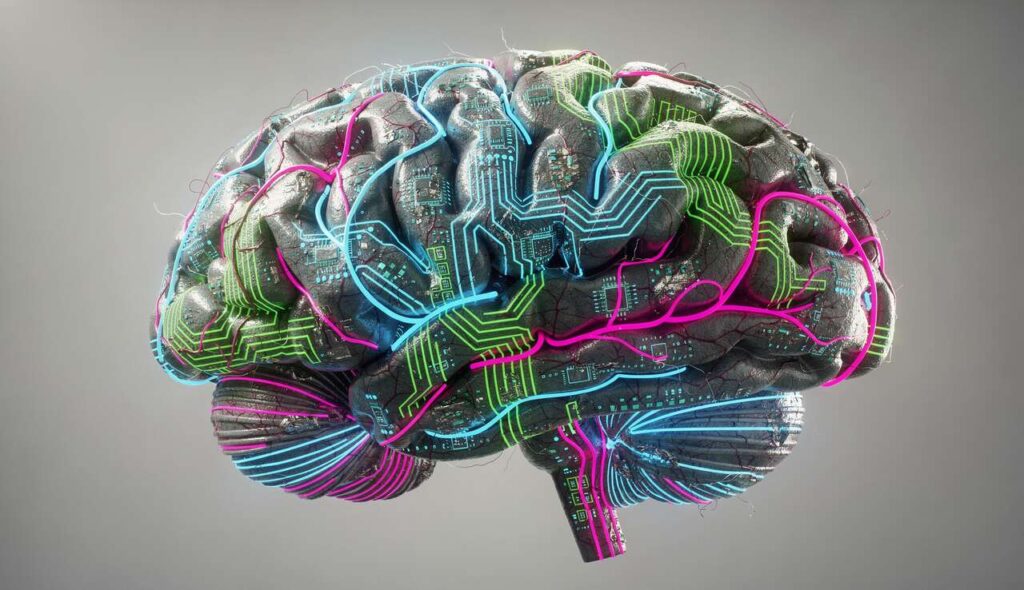
Recent research has revealed a fascinating connection between computer programming and the way our brains naturally process information. Scientists have discovered that learning to code may not be as foreign to human cognition as previously thought, suggesting that our neural architecture possesses inherent capabilities that align remarkably well with computational thinking. This discovery challenges traditional assumptions about coding being an entirely artificial skill, instead positioning it as an activity that taps into fundamental cognitive processes already present within us.
The rise of coding and its connection to the human brain
The growing importance of programming in modern society
Programming has evolved from a niche technical skill into a fundamental literacy of the digital age. Educational institutions worldwide now recognise coding as an essential component of contemporary curricula, with many countries introducing programming concepts to children as young as five years old. This shift reflects a broader understanding that computational thinking extends beyond mere job preparation, offering cognitive benefits that enhance problem-solving abilities across diverse disciplines.
The expansion of coding education has prompted researchers to investigate why some individuals acquire programming skills more readily than others. Studies indicate that neurological factors play a significant role in this variation, suggesting that the brain possesses specific mechanisms that facilitate the comprehension of structured, logical systems.
Neurological parallels between language and code
Neuroscientists have identified striking similarities between how the brain processes natural languages and programming languages. Research conducted at institutions such as MIT and Johns Hopkins University demonstrates that coding activates brain regions associated with language processing, particularly areas involved in understanding complex grammar and syntax. However, coding also engages mathematical reasoning centres, creating a unique neural signature that combines linguistic and analytical processing.
| Brain Region | Function in Language | Function in Coding |
|---|---|---|
| Broca’s Area | Speech production and grammar | Syntax comprehension |
| Wernicke’s Area | Language comprehension | Semantic understanding |
| Prefrontal Cortex | Complex sentence structure | Algorithm planning |
These findings suggest that the human brain may be predisposed to understand structured systems of symbols and rules, making programming a more natural extension of existing cognitive abilities than previously assumed. Understanding these connections provides valuable insight into how our brains tackle the challenges inherent in learning computational languages.
How does the human brain process codes ?
The cognitive mechanisms behind code comprehension
Working memory plays a crucial role in processing code, allowing programmers to hold multiple variables, functions, and logical relationships in mind simultaneously. Research indicates that experienced programmers develop enhanced working memory capacity specifically for code-related information, suggesting that the brain adapts structurally to accommodate programming demands. This adaptation occurs through a process called neuroplasticity, where repeated exposure to coding tasks strengthens relevant neural pathways.
The brain employs several strategies when interpreting code:
- Pattern recognition to identify familiar code structures and design patterns
- Chunking to group related code elements into meaningful units
- Abstract reasoning to understand how specific implementations relate to general concepts
- Sequential processing to follow the logical flow of program execution
- Spatial visualisation to mentally map data structures and program architecture
The role of executive functions in programming
Executive functions, controlled primarily by the prefrontal cortex, are essential for successful coding. These higher-order cognitive processes include planning, problem decomposition, and error detection. When writing code, programmers must simultaneously consider multiple levels of abstraction, from low-level syntax to high-level system design. This requires sophisticated cognitive control mechanisms that coordinate various mental processes.
Debugging, in particular, engages executive functions intensively, as programmers must systematically identify logical errors, formulate hypotheses about their causes, and test potential solutions. This process mirrors scientific reasoning and demonstrates how coding exercises critical thinking skills applicable far beyond programming contexts. The brain’s capacity to handle these complex cognitive demands reveals its remarkable adaptability to structured problem-solving tasks.
The brain’s innate deciphering abilities
Pattern recognition as a fundamental cognitive skill
Humans possess an extraordinary ability to identify patterns, a capability that evolved to help our ancestors recognise environmental regularities and predict outcomes. This innate pattern recognition faculty proves invaluable when learning to code, as programming fundamentally involves identifying, creating, and manipulating patterns within logical systems. The brain’s visual cortex and association areas work together to detect structural similarities in code, enabling programmers to recognise common idioms and architectural patterns quickly.
Neurological studies using functional magnetic resonance imaging (fMRI) reveal that experienced programmers activate pattern recognition networks more efficiently than novices when reviewing code. This suggests that coding proficiency involves training the brain to recognise domain-specific patterns, much like chess masters develop the ability to perceive meaningful board configurations instantly.
Symbolic reasoning and abstraction
The human brain’s capacity for symbolic thought distinguishes us from other species and forms the foundation for coding ability. Symbolic reasoning allows us to manipulate abstract representations divorced from concrete physical reality, a skill essential for programming where variables, functions, and objects represent concepts rather than tangible entities.
This cognitive ability manifests in several ways:
- Understanding that a variable name represents a value that may change
- Recognising that functions encapsulate reusable sequences of operations
- Comprehending how abstract data types model real-world entities
- Grasping inheritance and polymorphism in object-oriented programming
Research indicates that the brain regions supporting mathematical reasoning and symbolic logic significantly overlap with those activated during programming tasks, reinforcing the notion that coding leverages pre-existing cognitive mechanisms rather than requiring entirely novel neural capabilities. These discoveries illuminate why programming, despite its technical complexity, can be mastered by individuals with diverse backgrounds and aptitudes.
Coding systems and natural learning
Intuitive aspects of programming logic
Many programming concepts mirror logical structures that humans use naturally in everyday reasoning. Conditional statements, for instance, reflect the if-then thinking that guides daily decision-making. Similarly, loops correspond to repetitive processes we encounter regularly, from following recipes to establishing routines. This alignment between programming constructs and natural thought patterns facilitates learning, as students can anchor new coding concepts to familiar cognitive frameworks.
Educational research demonstrates that teaching programming through real-world analogies significantly improves comprehension and retention. When learners recognise that coding formalises thinking patterns they already employ informally, the perceived barrier between human cognition and computational logic diminishes considerably.
The learning curve and cognitive development
Acquiring programming skills follows developmental stages similar to language acquisition. Beginners initially focus on syntax and basic constructs, gradually progressing to more complex concepts like recursion, object-oriented design, and algorithmic optimisation. This progressive mastery reflects how the brain builds increasingly sophisticated mental models through iterative exposure and practice.
| Learning Stage | Cognitive Focus | Neural Adaptation |
|---|---|---|
| Novice | Syntax memorisation | Establishing basic neural pathways |
| Intermediate | Problem decomposition | Strengthening executive function networks |
| Advanced | System design | Enhanced pattern recognition and abstraction |
Neuroscientific evidence suggests that coding practice induces measurable changes in brain structure, particularly in regions associated with attention, working memory, and problem-solving. These adaptations underscore the brain’s remarkable plasticity and its capacity to develop specialised capabilities in response to sustained cognitive challenges. Such findings have profound implications for understanding human potential in an increasingly digital world.
Neuroscience exploring the brain’s potential
Recent discoveries in cognitive neuroscience
Advanced neuroimaging techniques have enabled researchers to observe brain activity during programming tasks with unprecedented precision. Studies reveal that expert programmers exhibit distinct neural activation patterns compared to novices, with more efficient recruitment of relevant brain regions and reduced cognitive load when processing familiar code structures. These findings suggest that programming expertise involves not merely accumulating knowledge but fundamentally reorganising neural processing strategies.
Particularly intriguing is research indicating that bilingual individuals often demonstrate enhanced coding aptitude, possibly because their brains have already adapted to managing multiple symbolic systems. This cross-domain transfer effect highlights the brain’s integrative nature and suggests that diverse cognitive experiences may synergistically enhance programming ability.
Implications for education and training
Understanding the neurological basis of coding proficiency offers valuable guidance for educational approaches. Research indicates that certain teaching methods align better with how the brain naturally processes information:
- Hands-on practice to strengthen procedural memory pathways
- Spaced repetition to consolidate learning through synaptic reinforcement
- Project-based learning to engage multiple cognitive systems simultaneously
- Collaborative programming to activate social cognition networks
- Visual representations to leverage the brain’s powerful image processing capabilities
Neuroscience-informed pedagogy recognises that effective coding instruction must account for cognitive load limitations, provide scaffolding appropriate to developmental stages, and create opportunities for the deliberate practice necessary to induce lasting neural changes. As our understanding of the brain’s learning mechanisms deepens, educational strategies can become increasingly targeted and effective. These insights promise to make programming more accessible to broader populations, democratising a skill increasingly central to modern life.
The future of coding and its impact on human development
Emerging trends in human-computer interaction
As programming becomes more integrated into everyday life, the distinction between human thought and computational processes continues to blur. Natural language processing and visual programming environments are making coding more intuitive, reducing the syntactic burden and allowing programmers to focus on logical problem-solving. These developments align with neuroscientific findings suggesting that the brain’s strength lies in conceptual thinking rather than memorising arbitrary syntax rules.
Future programming paradigms may leverage the brain’s natural capabilities even more directly, potentially incorporating brain-computer interfaces that translate thought patterns into executable code. Whilst such technologies remain largely experimental, they represent a logical extension of recognising coding as a fundamentally human cognitive activity.
Broader cognitive benefits of programming literacy
Beyond its practical applications, coding proficiency confers cognitive advantages that extend across domains. Research demonstrates that programming experience enhances:
- Systematic problem-solving approaches applicable to diverse challenges
- Attention to detail and precision in thinking
- Ability to manage complexity through hierarchical organisation
- Resilience and persistence when confronting difficult problems
- Metacognitive awareness of one’s own thinking processes
These transferable skills suggest that programming education serves purposes beyond workforce preparation, contributing to general cognitive development and intellectual flexibility. As neuroscience continues illuminating the relationship between coding and brain function, society may increasingly view programming literacy as a fundamental component of cognitive fitness, comparable to numeracy and literacy in importance.
The convergence of neuroscience and computer science has illuminated remarkable compatibilities between human cognition and programming. Our brains possess inherent pattern recognition abilities, symbolic reasoning capacities, and logical processing mechanisms that align naturally with computational thinking. Research demonstrates that coding activates neural networks associated with language, mathematics, and executive function, whilst programming practice induces beneficial neuroplastic changes. These findings suggest that coding represents not an alien skill imposed upon reluctant minds but rather an activity that resonates with fundamental cognitive capabilities. As educational approaches increasingly incorporate neuroscientific insights, programming literacy promises to become more accessible, unlocking human potential in an evolving digital landscape.