



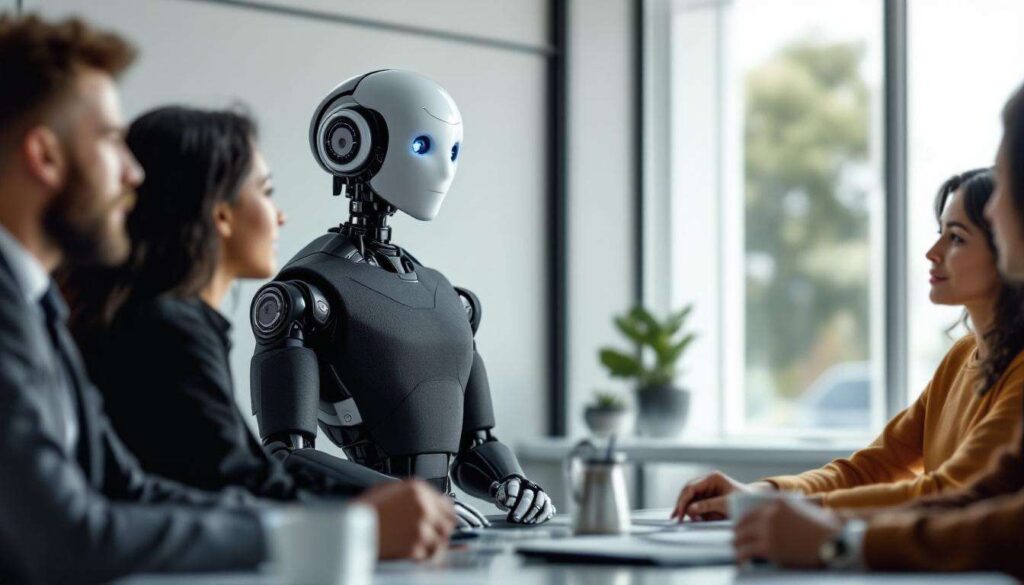
The rapid advancement of artificial intelligence has sparked intense discussions across the technology sector, with humanoid robots now joining the conversation. As industry leaders and investors pour billions into AI development, questions arise about whether this enthusiasm represents genuine innovation or an overinflated market bubble. A recent statement from a prominent humanoid robot has added a measured voice to this debate, carefully navigating the complex landscape of technological optimism and economic caution. The machine’s diplomatic response highlights the delicate balance between acknowledging AI’s transformative potential and recognising the legitimate concerns surrounding its explosive growth.
The debate on the rise of artificial intelligence
The unprecedented growth of AI investments
The artificial intelligence sector has witnessed extraordinary financial influx over recent years, with venture capital firms and tech giants competing to secure positions in this burgeoning field. Investment figures have reached staggering heights, prompting comparisons to previous technology booms that ended in market corrections. The enthusiasm surrounding AI applications has created an environment where valuations often exceed traditional metrics, raising eyebrows amongst financial analysts and seasoned investors alike.
Diverging opinions within the tech community
The technology community remains deeply divided on the sustainability of current AI growth trajectories. Key perspectives include:
- Optimists who view AI as a fundamental paradigm shift comparable to the internet revolution
- Sceptics who point to inflated valuations and unproven business models
- Pragmatists who acknowledge both transformative potential and market exuberance
- Critics who warn of regulatory challenges and ethical considerations slowing adoption
This spectrum of viewpoints reflects the complexity inherent in assessing emerging technologies, particularly when commercial interests intersect with genuine innovation. The discourse has intensified as major technology companies integrate AI capabilities across their product portfolios, further blurring the lines between hype and substance.
Historical parallels and lessons learnt
Market observers frequently draw comparisons between the current AI enthusiasm and historical technology bubbles. The dot-com era serves as a cautionary tale, where excessive speculation led to dramatic market corrections that reshaped the technology landscape. However, proponents argue that AI represents a more fundamental technological shift with tangible applications already demonstrating value across industries. The challenge lies in distinguishing between companies building sustainable AI solutions and those merely capitalising on market sentiment.
These ongoing discussions set the stage for understanding how humanoid robots fit into the broader AI ecosystem and their unique perspective on market dynamics.
The role of humanoid robots in today’s industry
Current applications and deployments
Humanoid robots have transitioned from research laboratories to practical industrial environments, demonstrating tangible value propositions across multiple sectors. Manufacturing facilities increasingly deploy these machines for tasks requiring dexterity and adaptability, whilst healthcare institutions explore their potential in patient care and assistance. The retail sector has begun experimenting with humanoid robots for customer service roles, creating visible touchpoints between advanced robotics and everyday consumers.
| Industry Sector | Primary Applications | Adoption Stage |
|---|---|---|
| Manufacturing | Assembly, quality control, logistics | Early deployment |
| Healthcare | Patient assistance, therapy support | Pilot programmes |
| Retail | Customer service, inventory management | Experimental phase |
| Hospitality | Reception, concierge services | Limited trials |
Technical capabilities and limitations
Contemporary humanoid robots combine sophisticated sensors, actuators, and AI-driven control systems to navigate complex environments. Their capabilities include object recognition, natural language processing, and adaptive movement planning. However, significant limitations persist, including restricted battery life, high maintenance requirements, and challenges in unpredictable scenarios. These constraints shape realistic expectations about their near-term deployment potential and influence industry perspectives on investment priorities.
Understanding these practical realities helps contextualise the cautious stance that humanoid robots and their developers maintain regarding broader AI market dynamics.
Cautious reactions to the success of artificial intelligences
The diplomatic stance of advanced robotics
When questioned about whether the AI boom constitutes a bubble, the humanoid robot’s response exemplified calculated diplomacy rarely seen in technology discourse. Rather than offering definitive judgements, the machine acknowledged multiple perspectives whilst emphasising the importance of sustainable development. This measured approach reflects both programmed caution and perhaps an understanding that premature declarations could influence market sentiment in unpredictable ways.
Balancing optimism with realism
The robot’s careful wording highlights several important considerations:
- Recognition of genuine technological breakthroughs in AI capabilities
- Acknowledgement of market enthusiasm potentially outpacing practical applications
- Emphasis on long-term value creation over short-term speculation
- Awareness of the varied maturity levels across different AI domains
This nuanced position resonates with industry veterans who have witnessed previous technology cycles and understand the dangers of both excessive pessimism and unbridled enthusiasm. The humanoid robot’s response serves as a reminder that sophisticated analysis requires considering multiple timeframes and perspectives simultaneously.
Such measured assessments naturally lead to examining the specific risks and opportunities that characterise the current AI landscape.
The risks and opportunities of AI expansion
Potential pitfalls in rapid AI adoption
The accelerated pace of AI integration presents significant challenges that warrant careful consideration. Cybersecurity vulnerabilities multiply as AI systems become embedded in critical infrastructure, whilst ethical concerns surrounding bias, privacy, and accountability remain inadequately addressed. Regulatory frameworks struggle to keep pace with technological advancement, creating uncertainty for businesses and potential risks for consumers. Additionally, the concentration of AI capabilities amongst a few dominant players raises concerns about market competition and innovation diversity.
Transformative opportunities across sectors
Despite legitimate concerns, AI expansion offers unprecedented opportunities for societal advancement. Healthcare stands to benefit from improved diagnostic accuracy and personalised treatment protocols, whilst environmental monitoring gains powerful tools for climate change mitigation. Education systems can leverage AI for individualised learning experiences, and scientific research accelerates through enhanced data analysis capabilities. The economic potential extends beyond technology companies, promising productivity gains across traditional industries.
| Opportunity Area | Potential Impact | Implementation Timeline |
|---|---|---|
| Medical diagnostics | Earlier disease detection | 2-5 years |
| Climate modelling | Improved predictions | 3-7 years |
| Personalised education | Enhanced learning outcomes | 5-10 years |
| Industrial automation | Productivity increases | Ongoing |
These contrasting elements underscore why expert opinions on the bubble question remain divided and merit closer examination.
The experts’ perspective on the tech bubble issue
Financial analysts’ assessments
Market analysts employ various methodologies to evaluate whether current AI valuations reflect sustainable growth or speculative excess. Traditional metrics such as price-to-earnings ratios often prove inadequate for companies prioritising growth over profitability. Some experts point to fundamental differences between current AI investments and previous bubbles, noting that today’s technologies demonstrate clear revenue generation and cost reduction capabilities. Others warn that market psychology mirrors past manias, with fear of missing out driving irrational investment decisions.
Technology leaders’ viewpoints
Prominent figures within the technology sector offer diverse perspectives shaped by their positions and experiences. Established companies emphasise steady integration of AI capabilities into existing products, suggesting a more evolutionary than revolutionary trajectory. Startup founders naturally advocate for transformative potential, whilst some veteran entrepreneurs who experienced previous boom-bust cycles urge caution. This diversity of opinion reflects genuine uncertainty about timing and scale rather than clear consensus on outcomes.
These expert assessments provide essential context for understanding AI’s broader implications for society and technology’s future direction.
The impact of AI on technological and societal future
Reshaping workforce dynamics
Artificial intelligence continues to fundamentally alter employment landscapes across industries, creating both displacement concerns and new opportunity categories. Routine cognitive tasks face automation, whilst demand grows for roles requiring AI system oversight, ethical governance, and human-AI collaboration skills. Educational institutions grapple with preparing students for careers that may not yet exist, emphasising adaptability and continuous learning over static skill sets.
Transforming human-technology interaction
The proliferation of AI systems changes how humans engage with technology at fundamental levels. Natural language interfaces reduce technical barriers, making advanced capabilities accessible to broader populations. However, this accessibility raises questions about digital literacy, critical thinking, and dependency on automated systems. Society must navigate the balance between leveraging AI benefits and maintaining human agency, creativity, and decision-making authority in crucial domains.
Long-term societal implications
Beyond immediate technological and economic considerations, AI expansion prompts profound questions about human society’s trajectory:
- How will AI influence social structures and power distribution ?
- What safeguards ensure equitable access to AI benefits ?
- How can societies maintain cultural diversity amid technological homogenisation ?
- What governance models best balance innovation with public interest protection ?
These considerations extend far beyond bubble economics, touching fundamental aspects of human civilisation’s future direction and the role technology plays in shaping collective destiny.
The humanoid robot’s cautious response to bubble speculation reflects broader uncertainties surrounding AI’s trajectory. Whilst investment levels and market enthusiasm raise legitimate concerns about sustainability, the technology demonstrates genuine transformative potential across numerous domains. The challenge lies not in declaring whether current conditions constitute a bubble, but in fostering responsible development that maximises societal benefits whilst mitigating risks. As AI capabilities advance and humanoid robots become more prevalent, maintaining this balanced perspective becomes increasingly crucial for navigating the complex interplay between technological innovation, market dynamics, and human welfare. The conversation continues, shaped by ongoing developments and the measured voices contributing thoughtful analysis to this defining technological moment.