


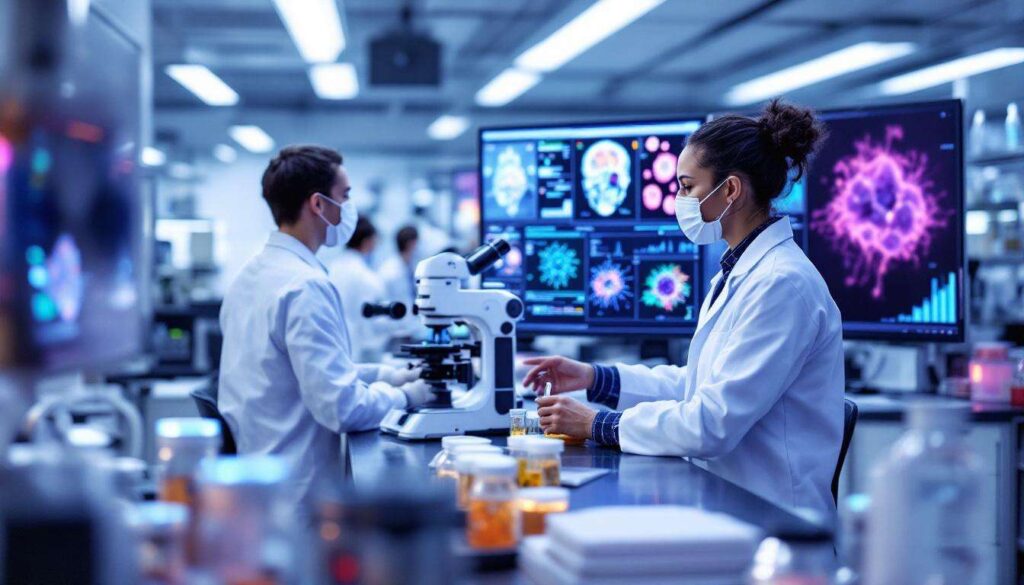
Cancer has confounded scientists and clinicians for more than a hundred years, with researchers striving to decode the mechanisms that transform healthy cells into malignant ones. Despite remarkable progress in treatment modalities and diagnostic techniques, the fundamental question of why cancer develops and how it can be definitively conquered remains partially unanswered. Artificial intelligence now emerges as a powerful ally in this enduring battle, offering unprecedented capabilities to analyse vast datasets, identify patterns invisible to the human eye, and potentially unlock secrets that have eluded conventional research methods for generations.
The cancer mystery: a century-long quest
The complexity of cancer biology
Cancer represents not a single disease but a collection of more than 200 distinct conditions, each characterised by unique genetic mutations, environmental triggers, and biological behaviours. This extraordinary diversity has made developing universal treatments exceptionally challenging. Researchers have long struggled to understand why certain individuals develop specific cancers whilst others with similar risk factors remain unaffected. The heterogeneity of tumours, even within a single patient, adds another layer of complexity that traditional research methodologies have found difficult to unravel.
Historical milestones and persistent questions
The scientific community has achieved remarkable breakthroughs over the decades, from identifying carcinogens to developing targeted therapies and immunotherapies. Yet fundamental questions persist about cancer’s origins, progression mechanisms, and resistance to treatment. Understanding why some cancers respond to specific interventions whilst others prove resistant has remained a particularly vexing challenge. These unanswered questions have driven researchers to seek innovative approaches that can process and interpret biological information at scales previously unimaginable.
The limitations of traditional research methods have become increasingly apparent as the complexity of cancer biology has been revealed, paving the way for revolutionary technological solutions.
The revolution of AI technologies in oncology
Machine learning transforms cancer research
Artificial intelligence, particularly machine learning algorithms, has fundamentally altered the landscape of oncological research. These sophisticated systems can identify subtle patterns within genomic data, medical imaging, and clinical records that human researchers might overlook. Deep learning networks, inspired by the structure of the human brain, excel at recognising complex relationships between variables, making them ideally suited for cancer research where multiple factors interact in intricate ways.
Key applications in oncology
AI technologies are being deployed across numerous aspects of cancer care and research:
- Early detection through advanced imaging analysis that identifies microscopic abnormalities
- Genomic sequencing interpretation to pinpoint cancer-causing mutations
- Treatment response prediction based on patient-specific factors
- Drug discovery acceleration through virtual screening of molecular compounds
- Clinical trial matching to connect patients with appropriate experimental therapies
Precision medicine and personalised treatment
The concept of precision oncology relies heavily on AI’s ability to integrate diverse data sources and generate individualised treatment recommendations. By analysing a patient’s genetic profile, tumour characteristics, lifestyle factors, and treatment history, AI systems can suggest therapeutic approaches with the highest likelihood of success. This personalised strategy represents a dramatic departure from the one-size-fits-all treatments that dominated cancer care for decades.
The effectiveness of these AI applications depends critically on the quality and quantity of data available for analysis.
Big data analysis: a boon for AI
The explosion of medical data
Modern healthcare generates enormous volumes of information, from electronic health records and genomic sequences to medical images and wearable device measurements. This data deluge would be overwhelming for human researchers to process manually, but it provides the fuel that powers AI systems. Cancer research particularly benefits from this abundance, as comprehensive datasets enable algorithms to identify correlations and causative factors with statistical confidence.
Integration of diverse data sources
| Data Type | Application in Cancer Research | Volume Generated |
|---|---|---|
| Genomic sequences | Mutation identification | Terabytes per patient |
| Medical imaging | Tumour detection and monitoring | Gigabytes per scan |
| Clinical records | Treatment outcome analysis | Megabytes per patient |
| Pathology slides | Cellular analysis | Gigabytes per specimen |
Overcoming data silos
Historically, medical data remained isolated in individual institutions, limiting research potential. AI initiatives now encourage data sharing whilst maintaining patient privacy through advanced anonymisation techniques. Collaborative platforms allow algorithms to learn from global datasets, substantially improving their predictive accuracy and generalisability across diverse populations.
These data-driven approaches have already yielded tangible results in the fight against cancer.
AI’s initial successes against cancer
Diagnostic breakthroughs
AI systems have demonstrated remarkable accuracy in detecting various cancers at early stages. Algorithms analysing mammograms now match or exceed radiologist performance in identifying breast cancer, whilst skin cancer detection apps can distinguish malignant melanomas from benign lesions with impressive precision. These diagnostic tools promise to make screening more accessible and reduce the burden on healthcare professionals.
Treatment optimisation achievements
Several AI platforms have successfully predicted patient responses to specific chemotherapy regimens, enabling oncologists to select the most effective treatments whilst avoiding unnecessary toxicity. In radiation therapy, AI systems optimise beam delivery to maximise tumour damage whilst sparing healthy tissue, improving outcomes and reducing side effects.
Drug discovery acceleration
Pharmaceutical companies now employ AI to identify promising drug candidates from millions of potential compounds, dramatically reducing the time and cost of bringing new cancer therapies to market. Machine learning models predict molecular interactions and potential side effects, streamlining the development pipeline.
Despite these encouraging advances, significant obstacles remain before AI can fully realise its potential in oncology.
The challenges for the future of AI in medicine
Technical and ethical considerations
AI systems require rigorous validation before clinical deployment, as errors in cancer diagnosis or treatment recommendations could have catastrophic consequences. Ensuring algorithm transparency and interpretability remains challenging, particularly with complex deep learning models that function as “black boxes”. Regulatory frameworks must evolve to address these unique concerns whilst fostering innovation.
Data quality and bias issues
AI algorithms are only as reliable as the data upon which they are trained. Historical biases in medical research, such as underrepresentation of certain ethnic groups or socioeconomic populations, can be perpetuated or amplified by AI systems. Addressing these disparities requires deliberate efforts to collect diverse, representative datasets and continuously monitor algorithm performance across different populations.
Integration into clinical practice
Healthcare systems face practical challenges in implementing AI technologies, including infrastructure costs, training requirements, and workflow integration. Clinician acceptance depends on demonstrating clear benefits and maintaining the human element in patient care that remains essential for trust and compassion.
The convergence of artificial intelligence and cancer research represents a paradigm shift in how we approach this devastating group of diseases. Whilst AI has already demonstrated impressive capabilities in detection, diagnosis, and treatment optimisation, the journey towards comprehensively solving the cancer mystery continues. Success will require ongoing collaboration between technologists, clinicians, researchers, and policymakers to overcome technical limitations, address ethical concerns, and ensure equitable access to these powerful tools. The promise of AI in oncology extends beyond incremental improvements, offering the potential to fundamentally transform our understanding of cancer biology and deliver personalised, effective treatments to patients worldwide.