


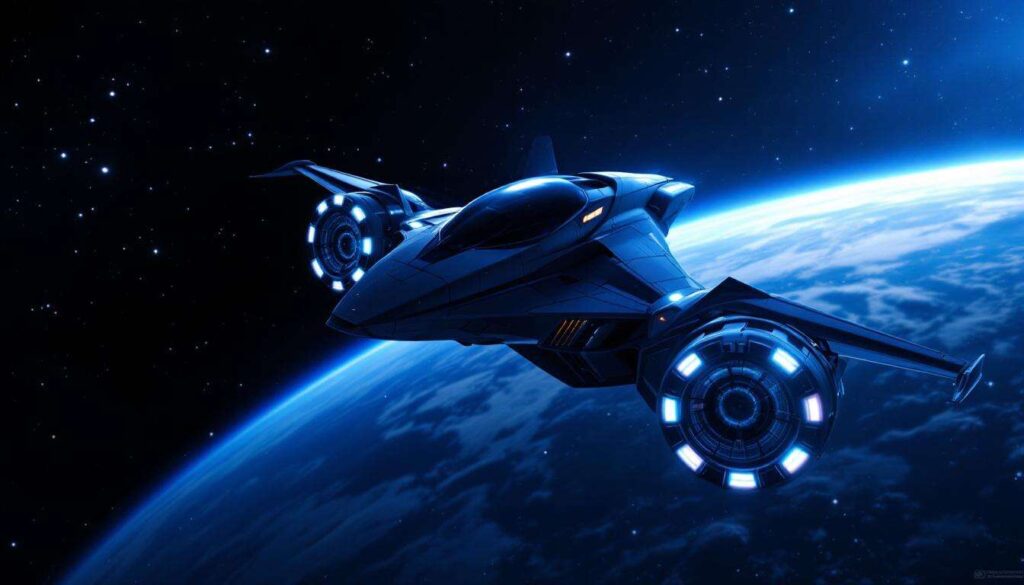
Space exploration stands at a pivotal moment as artificial intelligence transforms the fundamental technologies that power our journeys beyond Earth. Engineers and scientists are harnessing machine learning algorithms to revolutionise spacecraft propulsion systems, achieving unprecedented levels of efficiency whilst simultaneously exploring radical new concepts. Among the most ambitious developments is the potential integration of nuclear-powered propulsion, a technology that could dramatically reduce travel times to distant planets. This convergence of AI and advanced propulsion represents not merely an incremental improvement but a paradigm shift in humanity’s capacity to explore the cosmos.
Artificial intelligence: revolution in space propulsion
The emergence of intelligent propulsion systems
Artificial intelligence has fundamentally altered how spacecraft propulsion systems are designed, tested, and operated. Traditional propulsion development relied heavily on iterative physical prototyping, a process requiring years of testing and substantial financial investment. Modern AI systems now simulate millions of design variations in virtual environments, identifying optimal configurations that human engineers might never have considered. Machine learning algorithms analyse vast datasets from previous missions, extracting patterns that inform next-generation designs.
Real-time adaptive capabilities
Contemporary AI-powered propulsion systems possess the remarkable ability to adapt in real-time to changing mission parameters. These intelligent systems continuously monitor:
- fuel consumption rates and remaining reserves
- thrust vector efficiency across multiple engine configurations
- environmental conditions including solar radiation and gravitational influences
- structural stress indicators and thermal management requirements
By processing these variables simultaneously, AI controllers make microsecond adjustments that maximise performance whilst minimising resource expenditure, a feat impossible for human operators managing missions from Earth with significant communication delays.
These revolutionary capabilities in intelligent propulsion naturally lead to specific optimisation techniques that are transforming engine performance across the industry.
Optimising engines through AI
Predictive maintenance and performance enhancement
AI algorithms have introduced predictive maintenance protocols that identify potential engine failures before they occur. Neural networks trained on historical performance data recognise subtle anomalies in vibration patterns, temperature fluctuations, and pressure readings that precede component degradation. This foresight allows mission controllers to implement corrective measures proactively, significantly extending engine operational lifespans and reducing catastrophic failure risks.
Combustion optimisation techniques
Machine learning systems have achieved remarkable improvements in combustion chamber efficiency. AI models simulate complex fluid dynamics within engines, optimising fuel injection timing, mixture ratios, and ignition sequences. These refinements yield measurable performance gains:
| Parameter | Traditional systems | AI-optimised systems |
|---|---|---|
| Specific impulse efficiency | baseline | 8-12% improvement |
| Fuel consumption reduction | baseline | 15-20% decrease |
| Thrust stability variance | ±3.5% | ±1.2% |
Such optimisation extends beyond chemical propulsion to electric and ion drive systems, where AI fine-tunes electromagnetic field configurations and plasma acceleration parameters.
The efficiency gains achieved through these optimisation techniques contribute directly to broader energy management strategies essential for extended space missions.
Towards increased energy efficiency of spacecraft
Integrated power management systems
AI-driven energy efficiency encompasses far more than propulsion alone. Modern spacecraft employ holistic energy management systems that balance power distribution across all subsystems. Machine learning algorithms predict energy requirements based on mission phases, allocating resources dynamically between propulsion, life support, scientific instruments, and communication arrays. This integrated approach reduces waste and extends mission durations substantially.
Trajectory optimisation and fuel conservation
Perhaps the most significant efficiency gains emerge from AI-calculated trajectory optimisation. Traditional flight paths followed relatively straightforward routes, but AI systems compute extraordinarily complex trajectories that exploit:
- gravitational assists from multiple celestial bodies in succession
- solar wind patterns for supplementary acceleration
- optimal launch windows accounting for planetary alignments years in advance
- minimal energy transfer orbits previously considered too computationally intensive
These sophisticated routes can reduce fuel requirements by substantial margins, sometimes enabling missions previously deemed impossible with conventional propulsion budgets.
Whilst these efficiency improvements prove invaluable, they also create the operational foundation necessary for implementing more powerful propulsion technologies.
AI and nuclear propulsion: a promising alliance
Nuclear thermal propulsion fundamentals
Nuclear thermal propulsion represents a transformative technology where a nuclear reactor heats propellant to extreme temperatures before expelling it through a nozzle. This approach offers specific impulse values approximately twice those of conventional chemical rockets, dramatically reducing transit times to Mars and beyond. However, the complexity of managing nuclear reactions in space environments has historically presented formidable challenges that AI is uniquely positioned to address.
AI control of nuclear systems
Artificial intelligence provides the sophisticated control mechanisms essential for safe nuclear propulsion operation. Machine learning systems manage reactor criticality with precision impossible through manual control, adjusting control rod positions and moderator flow rates in response to thermal fluctuations and power demands. AI algorithms predict reactor behaviour under various operational scenarios, ensuring stable performance throughout mission profiles whilst maintaining safety margins.
Design optimisation for nuclear engines
Beyond operational control, AI accelerates nuclear propulsion development by simulating reactor designs that maximise thrust whilst minimising mass and radiation shielding requirements. These computational models evaluate thousands of configuration permutations, identifying optimal fuel element geometries, coolant channel arrangements, and nozzle profiles that human designers would require decades to explore through conventional methods.
The technical promise of nuclear propulsion naturally raises critical questions about operational safety that must be thoroughly addressed.
Safety and viability of nuclear technologies in space
Radiation containment and crew protection
Safety considerations dominate nuclear propulsion discussions, particularly regarding radiation exposure for crewed missions. AI systems contribute significantly to safety protocols by continuously monitoring radiation levels and optimising shielding configurations. Machine learning models predict radiation dispersion patterns, enabling spacecraft designs that position habitable modules at safe distances from reactors whilst maintaining structural integrity and mass efficiency.
Fail-safe mechanisms and redundancy
Modern nuclear propulsion concepts incorporate multiple AI-managed fail-safe systems:
- autonomous reactor shutdown sequences triggered by anomaly detection
- redundant cooling systems with intelligent load balancing
- containment protocols for potential fuel element failures
- emergency propellant dump procedures to prevent overpressure events
These layered safety measures, coordinated through artificial intelligence, provide confidence that nuclear systems can operate reliably in the unforgiving space environment.
Regulatory frameworks and international cooperation
The viability of nuclear propulsion extends beyond technical capabilities to encompass regulatory acceptance and international agreements. AI facilitates compliance by maintaining comprehensive operational logs, demonstrating adherence to safety protocols, and providing transparent performance data to regulatory bodies. This technological transparency supports the development of international frameworks governing nuclear space activities.
Whilst safety remains paramount, the environmental implications of nuclear propulsion technologies demand equally rigorous examination.
Environmental impacts: challenges and solutions
Launch phase considerations
Environmental concerns regarding nuclear propulsion focus primarily on launch risks, where potential accidents could release radioactive materials into Earth’s atmosphere or biosphere. Contemporary approaches mitigate these risks by launching reactors in non-activated states, initiating nuclear reactions only after achieving stable orbit. AI systems monitor launch trajectories continuously, calculating abort scenarios and safe reactor disposal options should anomalies occur during ascent.
Space debris and long-term orbital considerations
Nuclear-powered spacecraft introduce unique challenges regarding end-of-life disposal. AI-managed deorbiting protocols ensure spent reactors follow trajectories that either achieve stable graveyard orbits beyond operational satellite zones or controlled atmospheric re-entry over uninhabited ocean regions. Machine learning algorithms optimise these disposal manoeuvres, balancing fuel efficiency with safety requirements.
Sustainable space exploration paradigms
Paradoxically, nuclear propulsion may ultimately prove more environmentally responsible than chemical alternatives for certain mission profiles. The superior efficiency reduces the total number of launches required, decreasing cumulative atmospheric pollution and launch infrastructure impacts. AI enables precise mission planning that maximises scientific return per launch, supporting sustainable exploration strategies.
The integration of artificial intelligence with advanced propulsion technologies marks a defining moment in space exploration history. AI-optimised engines deliver unprecedented efficiency gains, extending mission capabilities whilst reducing costs and environmental impacts. Nuclear propulsion, once considered too complex and risky, becomes viable through intelligent control systems that manage reactor operations with superhuman precision and reliability. These technological advances promise to compress interplanetary travel times, making Mars missions practical and enabling exploration of the outer solar system. As regulatory frameworks mature and international cooperation strengthens, the combination of AI and nuclear propulsion will likely define humanity’s next chapter beyond Earth, transforming ambitious visions into operational realities.