



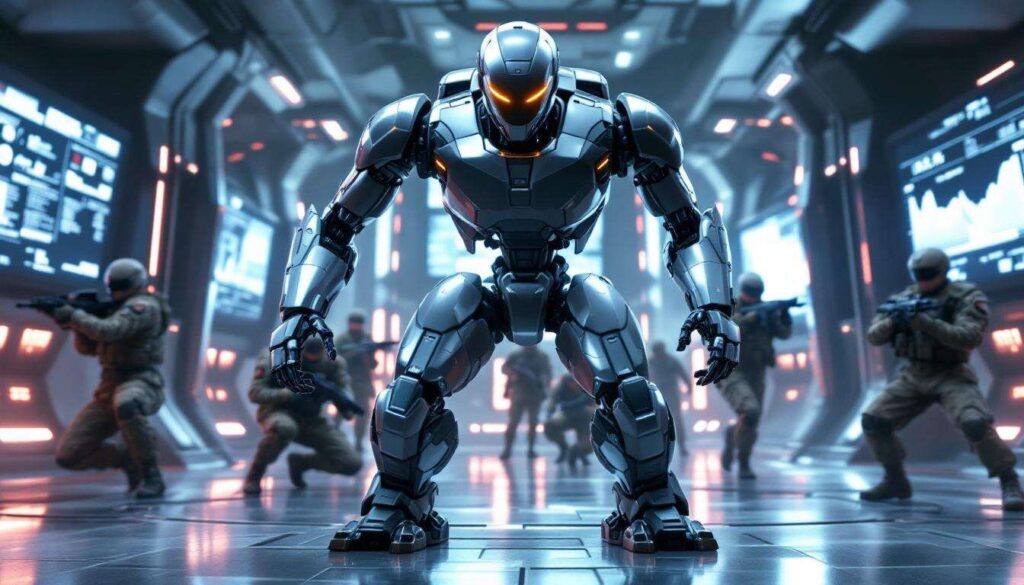
The Chinese military has recently revealed a groundbreaking robotic system capable of replicating soldiers’ combat movements in real time. This technological advancement represents a significant leap in autonomous military hardware, combining artificial intelligence with sophisticated motion-tracking capabilities. The robot, designed to mirror human tactical manoeuvres with remarkable precision, has sparked considerable interest within defence circles globally. As nations continue to invest heavily in military robotics, this development positions China at the forefront of autonomous warfare technology, raising important questions about the future landscape of armed conflict and the role of human operators in combat scenarios.
Introduction of the Chinese military robot
China’s defence research institutions have developed a humanoid military robot that employs advanced motion-capture technology to replicate soldiers’ movements instantaneously. The system was unveiled during a military technology demonstration, showcasing its ability to synchronise combat actions with human operators through wireless connectivity and sophisticated algorithms.
Development background
The project emerged from collaborative efforts between Chinese military research laboratories and leading robotics manufacturers. Engineers focused on creating a platform that could bridge the gap between human decision-making and robotic execution. The development process spanned several years, incorporating feedback from military personnel and field testing in various simulated combat environments. Researchers prioritised creating a system that maintained the tactical intelligence of human soldiers whilst leveraging the physical advantages of robotic platforms, such as enhanced durability and consistent performance under extreme conditions.
Design philosophy
The robot’s design reflects a fundamental shift in military robotics philosophy. Rather than programming pre-determined movement patterns, the system relies on real-time human input to guide its actions. This approach offers several advantages:
- Preservation of human tactical judgement in combat situations
- Flexibility to adapt to unpredictable battlefield scenarios
- Reduced risk to human personnel in dangerous operations
- Enhanced operational capabilities through robotic physical advantages
This innovative approach to military robotics sets the stage for examining the technical specifications that make such capabilities possible.
Technical characteristics of the robot
The Chinese military robot incorporates cutting-edge technology across multiple domains, from sensors to actuators, creating a highly responsive mechanical soldier.
Physical specifications
The robot stands approximately 1.8 metres tall and weighs around 80 kilograms, dimensions carefully chosen to match average human proportions. This sizing allows the robot to navigate environments designed for human soldiers, including standard doorways, trenches, and vehicles. The frame consists of lightweight composite materials that provide both structural integrity and ballistic protection, whilst advanced servo motors enable fluid movement across joints.
| Specification | Value |
|---|---|
| Height | 1.8 metres |
| Weight | 80 kilograms |
| Operating time | 4-6 hours |
| Maximum speed | 15 km/h |
| Payload capacity | 25 kilograms |
Motion-tracking system
The robot employs a sophisticated sensor array to capture operator movements with millisecond precision. Operators wear specialised suits equipped with motion sensors that transmit data wirelessly to the robot. The system processes this information through neural network algorithms, translating human movements into corresponding robotic actions. This technology enables the robot to replicate complex manoeuvres including:
- Tactical movement patterns such as advancing, retreating, and flanking
- Combat stances and firing positions
- Hand signals and gestural communications
- Climbing, crawling, and obstacle navigation
These technical foundations enable a range of innovative features that distinguish this robot from previous military platforms.
Major features and innovations
The Chinese military robot incorporates several groundbreaking capabilities that represent significant advances in autonomous warfare technology.
Real-time synchronisation
The robot’s most remarkable feature is its ability to mirror human movements with minimal latency. The system achieves synchronisation delays of less than 50 milliseconds, creating near-instantaneous replication of operator actions. This responsiveness ensures that tactical decisions translate immediately into robotic execution, maintaining the tempo of combat operations without the delays typical of remotely operated systems.
Adaptive learning capabilities
Beyond simple mimicry, the robot incorporates machine learning algorithms that analyse operator patterns over time. The system gradually develops an understanding of individual operator preferences and tactical styles, enabling it to anticipate movements and optimise performance. This adaptive capability means the robot becomes increasingly effective with prolonged use, developing a form of synthetic combat experience.
Environmental awareness
Integrated sensors provide the robot with comprehensive situational awareness, including:
- 360-degree visual spectrum cameras
- Thermal imaging for night operations
- Acoustic sensors for detecting threats
- Chemical and biological hazard detection
This sensory information feeds back to operators, creating a bidirectional information flow that enhances both human decision-making and robotic execution. Understanding these capabilities naturally leads to consideration of how such technology might be deployed in actual combat scenarios.
Potential applications on the battlefield
Military analysts have identified numerous scenarios where this robotic system could provide significant operational advantages.
High-risk reconnaissance missions
The robot excels in reconnaissance operations where human presence would be excessively dangerous. Operators can direct the robot into hostile territory, urban combat zones, or contaminated areas whilst remaining safely distant. The real-time control ensures that reconnaissance maintains the quality of human observation whilst eliminating personnel risk.
Urban warfare operations
Urban combat presents unique challenges that this technology addresses effectively. The robot can enter buildings, navigate tight spaces, and engage in close-quarters combat without exposing human soldiers to the extreme dangers of urban fighting. Its ability to replicate tactical movements means it can execute complex manoeuvres such as:
- Room clearing procedures
- Stairwell navigation under fire
- Coordinated multi-entry assaults
- Hostage rescue operations
Force multiplication
A single operator could potentially control multiple robots simultaneously, effectively multiplying combat power without proportionally increasing personnel requirements. This capability could prove particularly valuable for nations facing manpower constraints or seeking to reduce casualty rates whilst maintaining military effectiveness.
These potential applications have not gone unnoticed by the international community, prompting varied responses from military and political observers worldwide.
International reactions to this advance
The unveiling of China’s combat robot has generated significant discussion among defence establishments and international organisations.
Military responses
Western military powers have responded with a mixture of concern and competitive determination. United States defence officials acknowledged the technological achievement whilst emphasising their own robotic warfare programmes. European nations have called for increased investment in autonomous military systems to maintain technological parity. The development has accelerated existing military robotics programmes across several countries, with increased funding allocated to similar research initiatives.
Ethical and legal considerations
International humanitarian organisations have raised questions about the ethical implications of such technology. Key concerns include:
- Accountability for actions taken by robot-soldier systems
- Compliance with international humanitarian law
- Potential for escalation in autonomous weapons development
- Risk of lowering thresholds for military engagement
These reactions reflect broader anxieties about how this technology might reshape military conflict and international security dynamics.
Implications for the future of technological warfare
This development signals important shifts in how future conflicts may be conducted and how nations approach military capability development.
Arms race dynamics
The robot represents a potential catalyst for a new phase of military technological competition. Nations may feel compelled to develop comparable or superior systems to maintain strategic balance, potentially diverting resources from other defence priorities. This dynamic could reshape military budgets and research priorities globally, with artificial intelligence and robotics receiving increased emphasis.
Changing nature of combat
As robotic systems become more capable, the fundamental character of warfare may evolve. Future battlefields might feature mixed human-robot forces, with each element performing roles suited to their respective strengths. This evolution raises questions about military training, doctrine, and force structure that defence establishments must address.
Strategic stability considerations
The proliferation of such technology could affect strategic stability between major powers. Robots that reduce casualties for the deploying nation might lower barriers to military intervention, potentially increasing conflict frequency. Alternatively, the technology could enable more precise and controlled military operations, reducing collateral damage and civilian casualties.
China’s military robot represents a significant milestone in autonomous warfare technology, demonstrating capabilities that were theoretical until recently. The system’s ability to replicate human combat movements in real time combines the tactical judgement of soldiers with robotic advantages in durability and risk tolerance. Whilst the technology offers clear military benefits, it also raises important questions about ethics, international law, and strategic stability. As other nations respond with their own programmes, this development may mark the beginning of a new era in military technology, one where human-robot collaboration becomes standard in armed forces worldwide. The coming years will reveal whether such systems enhance security or introduce new risks into an already complex international environment.