



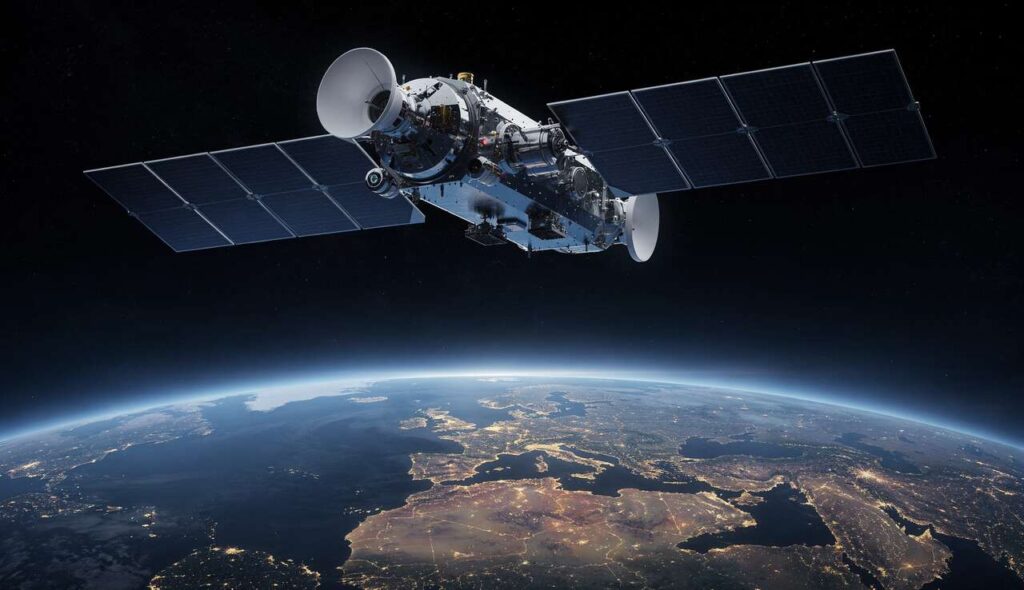
Quantum communication has long represented one of the most ambitious frontiers in modern physics, promising unprecedented security through the fundamental laws of nature. The idea of transmitting quantum information between Earth and satellites orbiting hundreds of kilometres above seemed to defy the very principles that make quantum mechanics so extraordinary. Photons carrying quantum states are notoriously fragile, susceptible to interference from atmospheric turbulence, background light, and the sheer distance they must traverse. For years, the scientific community debated whether establishing a reliable quantum uplink from ground stations to satellites was even theoretically feasible, let alone practically achievable.
The genesis of a scientific challenge
The fundamental principles of quantum communication
Quantum communication relies on quantum entanglement and the transmission of individual photons encoded with quantum information. Unlike classical communication systems that transmit billions of particles simultaneously, quantum systems depend on the delicate properties of single photons. These particles can exist in superposition states, carrying information in ways that classical bits cannot replicate. The no-cloning theorem ensures that any attempt to intercept or copy quantum information inevitably disturbs the system, providing inherent security.
The challenge intensifies when attempting to send these fragile quantum states through Earth’s atmosphere and across vast distances to orbiting satellites. Atmospheric conditions create significant obstacles:
- Turbulence causes beam wandering and distortion
- Absorption and scattering reduce photon transmission rates
- Background solar radiation introduces noise
- Weather conditions create unpredictable interference patterns
Early theoretical limitations
Initial calculations suggested that quantum uplinks faced insurmountable difficulties. The probability of successfully transmitting a single photon from ground to satellite appeared vanishingly small. Researchers calculated that atmospheric losses would exceed acceptable thresholds, making practical communication impossible. The scientific consensus held that whilst downlinks from satellites might work, uplinks required conditions that nature simply would not provide. This pessimistic outlook dominated the field throughout the early development of quantum communication technologies.
Understanding these fundamental barriers set the stage for exploring what specific technological requirements would need to be met to overcome them.
The technological stakes of the quantum link
Strategic importance for secure communications
The establishment of quantum satellite networks carries profound implications for global communications infrastructure. Governments and research institutions recognise that quantum key distribution offers theoretically unbreakable encryption. Traditional cryptographic methods remain vulnerable to advances in computing power, particularly with the looming threat of quantum computers capable of breaking current encryption standards. A functional quantum satellite network would provide:
- Unhackable communication channels for sensitive government operations
- Secure financial transactions immune to interception
- Protected scientific data sharing across international borders
- Defence applications requiring absolute communication security
Economic and scientific competitiveness
The race to achieve practical quantum satellite communications has become a matter of national prestige and economic advantage. Countries investing heavily in this technology position themselves at the forefront of the next communication revolution. Research teams worldwide compete to demonstrate capabilities that were recently dismissed as impossible, with substantial funding directed towards solving the uplink problem specifically.
| Application sector | Potential impact | Timeline estimate |
|---|---|---|
| Banking and finance | Quantum-secured transactions | 5-10 years |
| Government communications | Unhackable diplomatic channels | 3-7 years |
| Scientific collaboration | Secure data sharing networks | 5-12 years |
These high stakes naturally led researchers to confront the specific technical barriers that made uplinks seem impossible.
The major obstacles encountered
Atmospheric interference and photon loss
The Earth’s atmosphere presents a formidable obstacle course for quantum signals. Photons travelling upward must penetrate approximately 10 kilometres of dense atmosphere where turbulence, moisture, and particulates cause scattering and absorption. Unlike classical signals that can be amplified, quantum states cannot be copied or boosted without destroying the information they carry. Researchers measured transmission efficiencies below acceptable thresholds, with losses exceeding 30 decibels in many atmospheric conditions.
Pointing and tracking precision requirements
Establishing a quantum link requires extraordinary precision in beam pointing. The satellite moves at speeds exceeding 7 kilometres per second whilst the ground station must compensate for atmospheric refraction that constantly shifts the apparent position of the target. The beam divergence over hundreds of kilometres means that even microradian errors result in complete signal loss. Early systems struggled to maintain the necessary accuracy across variable atmospheric conditions.
Timing and synchronisation challenges
Quantum communication protocols demand precise timing synchronisation between ground stations and satellites. The systems must coordinate photon detection events occurring within nanosecond windows whilst accounting for:
- Doppler shifts from satellite motion
- Variable atmospheric delays
- Clock drift in space-based systems
- Relativistic time dilation effects
These combined challenges convinced many experts that practical quantum uplinks remained beyond current technological capabilities. However, recent developments have fundamentally altered this assessment.
A revolutionary scientific breakthrough
Adaptive optics and atmospheric compensation
The breakthrough came through sophisticated adaptive optics systems that actively compensate for atmospheric distortion in real-time. These systems use guide lasers and wavefront sensors to measure atmospheric turbulence, then adjust mirror surfaces thousands of times per second to pre-correct the outgoing quantum beam. This approach, borrowed from astronomical observation techniques, proved remarkably effective at preserving quantum state fidelity through atmospheric transmission.
Enhanced photon sources and detection
Advances in photon generation and detection technologies contributed significantly to making uplinks feasible. Researchers developed brighter quantum light sources that increase transmission rates without compromising quantum properties. Simultaneously, improved single-photon detectors with higher efficiency and lower dark count rates enabled reliable signal detection even with significant atmospheric losses. The combination of better sources and detectors narrowed the gap between theoretical requirements and practical capabilities.
Novel protocol implementations
Scientists implemented new quantum communication protocols specifically designed for uplink scenarios. These protocols incorporate error correction and verification methods that maintain security whilst tolerating higher loss rates than traditional approaches. The breakthrough demonstrated that with proper protocol design, quantum uplinks could achieve secure key distribution rates sufficient for practical applications.
| Technology component | Previous limitation | Breakthrough solution |
|---|---|---|
| Beam correction | Static optics insufficient | Adaptive optics at 1kHz+ rates |
| Photon detection | Low efficiency, high noise | Superconducting detectors |
| Tracking accuracy | Insufficient precision | AI-enhanced prediction algorithms |
This technological triumph naturally raises questions about how these advances might be applied beyond basic communication.
The potential applications of this advance
Global quantum internet infrastructure
The successful demonstration of quantum uplinks enables the construction of a truly global quantum internet. Satellites equipped to receive quantum signals from ground stations can relay entangled photons between continents, creating a worldwide network of quantum-secured nodes. This infrastructure would support applications requiring absolute privacy and security across international boundaries.
Fundamental physics experiments
Beyond communications, quantum satellite uplinks facilitate unprecedented physics experiments. Researchers can test quantum mechanics over distances and in conditions impossible to replicate in terrestrial laboratories. Potential experiments include:
- Tests of quantum entanglement across continental distances
- Investigations of quantum decoherence in varying gravitational fields
- Precision measurements of fundamental constants
- Searches for modifications to quantum mechanics at large scales
Commercial and industrial applications
Industries handling sensitive data recognise the commercial potential of quantum-secured satellite communications. Financial institutions could execute transactions with guaranteed security, whilst cloud computing providers might offer quantum-protected data storage accessible globally. The technology promises to revolutionise how organisations approach data security in an increasingly interconnected world.
These diverse applications point towards a transformed communications landscape in the coming decades.
The future of quantum communications
Scaling and network expansion
The immediate future involves scaling successful demonstrations into operational networks. Research teams are developing constellations of quantum satellites that provide continuous coverage rather than brief connection windows. Ground station networks are expanding, with facilities strategically positioned to maximise uplink opportunities under favourable atmospheric conditions. The transition from experimental demonstrations to practical infrastructure represents the next critical phase.
Integration with existing systems
Quantum communication systems must integrate seamlessly with classical infrastructure. Hybrid systems that combine quantum key distribution with conventional data transmission offer a practical pathway to deployment. Standardisation efforts are underway to ensure compatibility between different quantum communication platforms and to establish protocols for interoperability across international networks.
Remaining challenges and research directions
Despite recent breakthroughs, significant challenges remain before quantum satellite uplinks become routine. Researchers continue working on:
- Improving transmission rates under adverse weather conditions
- Reducing the cost and complexity of ground station equipment
- Developing more robust quantum memory systems for network nodes
- Extending operational ranges beyond low Earth orbit
The field continues to evolve rapidly, with each technological advance opening new possibilities that were previously considered impractical or impossible.
The achievement of practical quantum satellite uplinks marks a watershed moment in communication technology. What scientists once dismissed as impossible has become demonstrable reality through advances in adaptive optics, detector technology, and protocol design. This breakthrough enables global quantum networks offering unprecedented security, facilitates fundamental physics research, and positions quantum communication as a cornerstone of future information infrastructure. Whilst challenges remain in scaling these systems to operational networks, the transition from theoretical impossibility to practical demonstration illustrates how persistent innovation can overcome seemingly insurmountable barriers. The quantum communication revolution has moved from laboratory curiosity to imminent technological reality.